\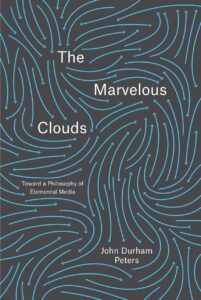
"Not only is writing a difficult practice to master; it is even more difficult to define. Its activities are so immensely diverse and technically complicated that a single overarching understanding is impossible." This passage from John Peters Durham's book, The Marvelous Clouds, certainly captures the multifaceted nature of writing. It is based on the experiences and observations of innumerable writers, educators, and researchers who have struggled with the various issues of writing.
To begin with, the argument Peters makes that writing is a difficult skill to acquire is unmistakable. Writing is more than just transferring ideas to paper or a screen, and Peters seems to relay this idea. It necessitates a precise balance of language, style, structure, and audience awareness. Mastery of language and syntax is only the tip of the iceberg; true writing talent includes the capacity to communicate ideas with clarity, coherence, and eloquence. Writers must negotiate a complex world in which every word, sentence, and paragraph must be painstakingly designed to produce the desired impact. Achieving such mastery involves not only time and effort but also a thorough comprehension of linguistic nuances and the art of persuasion.
The issue of defining writing is equally difficult. While it may appear simple at first look, writing comprises an astoundingly diverse range of forms and functions. Writing serves a variety of functions, each with its own set of rules and standards, ranging from the evocative lines of poetry to the exact and technical language of scientific research papers, and from the imaginative storytelling of novels to the concise communication of corporate reports. Trying to incorporate all of these many expressions under a single, all-encompassing description is a difficult undertaking.
Writing is a chameleon in that it adapts to its surroundings, altering itself to match the needs of the moment.
Moreover, the absence of a single overarching understanding of writing is a testament to its complexity. What may be considered exemplary writing in one context could be deemed inappropriate in another. A novelist may revel in the freedom of artistic expression, whereas a technical writer must adhere to strict guidelines and industry standards. A poet may play with ambiguity and symbolism, while a journalist must strive for clarity and objectivity. This lack of a uniform standard highlights the subjectivity inherent in writing and the importance of tailoring one's approach to suit the specific demands of the task at hand.
In conclusion, Peters eloquently captures the essence of writing as a challenging yet deeply rewarding endeavor. He underscores the difficulty of mastering the craft and the elusiveness of a comprehensive definition due to its diversity and technical complexity. Writing, in all its forms, is a dynamic and ever-evolving art that demands adaptability and an ongoing commitment to excellence. While defining it may remain a complex task, the beauty of writing lies in its capacity to transcend boundaries and communicate the richness of human thought and expression.
